Sixfingers AI Art Magazine: Featured in Vol. 1 & 2
My works Unstable Realities and Conformity were selected for the Sixfingers AI art magazine, the free monthly archive of featured works on IIIIL.
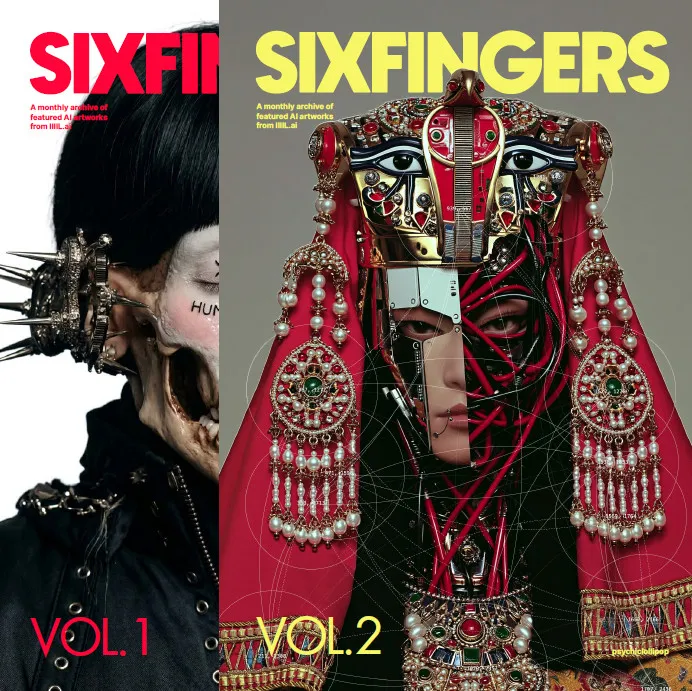
Two of my works have been selected for the Sixfingers AI art magazine, the free monthly publication of the IIIIL platform. “Unstable Realities” appeared in Vol. 1, and “Conformity” followed in Vol. 2. Notably, neither image was submitted anywhere. Both were pulled from the platform’s featured stream, and that difference matters far more than the page count.
What the Sixfingers AI Art Magazine Is
SIXFINGERS is a free monthly digital magazine published by IIIIL. Each issue collects the works that the platform selected as Featured during the preceding month. Consequently, it reads less like a curated gallery catalogue and more like an archive – a monthly snapshot of what a large creator community actually produced.
The numbers give a sense of the scale. Vol. 1 gathers 290 artworks by 128 creators across 324 pages, drawn from July 2026. Meanwhile, Vol. 2 grows to 328 artworks by 144 creators across 362 pages, covering August 2026. Furthermore, both issues stay free to read online and free to download.
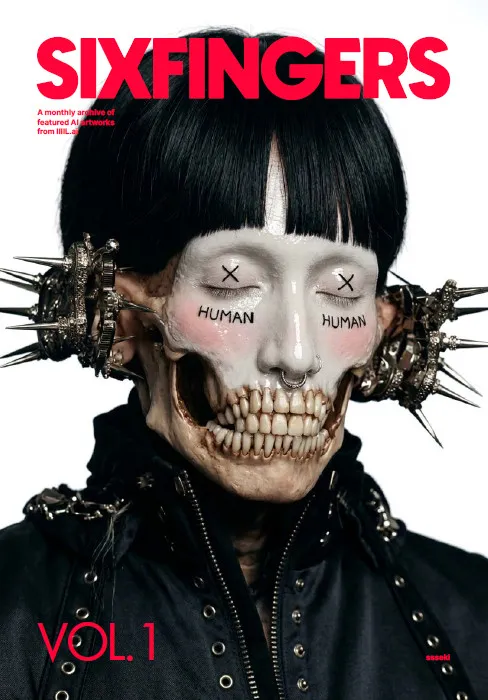
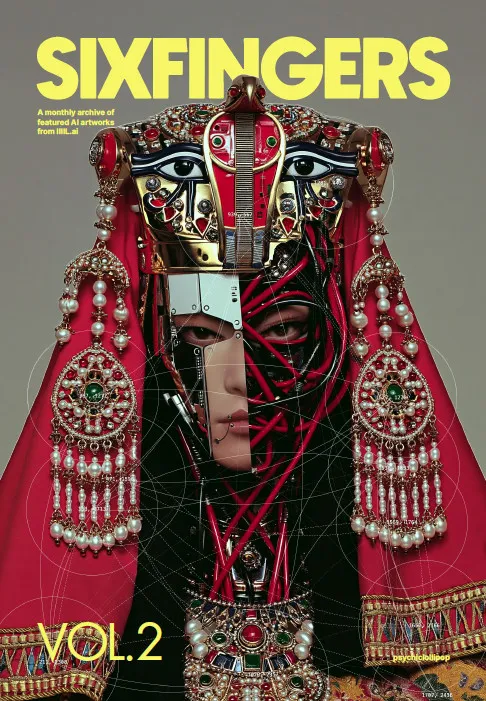
Each issue also carries a cover by a creator from the platform itself. Vol. 1 opens with a work by ssseki, a portrait split between skin and exposed skull. Vol. 2 follows with a piece by psychiclollipop, a figure buried under red silk and gilded ornament. Consequently, the covers set a tone that the archive inside then complicates.
No Open Call, No Submission
There is no submission process for the Sixfingers AI art magazine. Artists cannot apply to a specific issue. Instead, they need an approved Creator account on IIIIL, and their published work has to be selected as Featured during that month.
I find this structure genuinely useful, because it removes the usual self-selection. You do not send your strongest piece to a jury. You publish, and the editorial eye either lands on the work or it does not. As a result, appearing in two consecutive issues says more about a consistent line than about one lucky image.
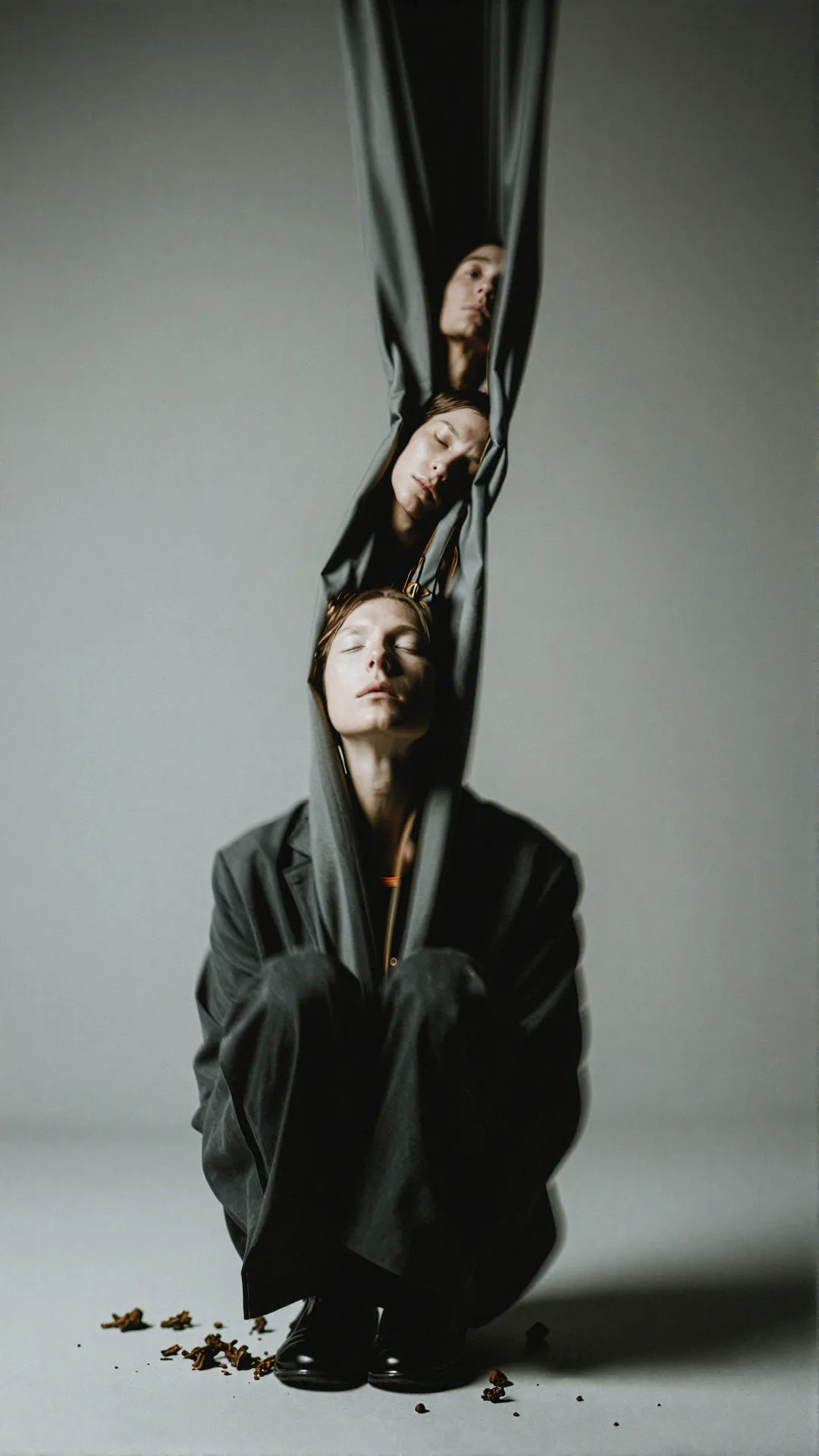
“Unstable Realities” in Vol. 1
A crouched figure sits in a heavy grey suit. Out of the collar the fabric keeps rising, and three faces emerge from it at different heights, eyes closed, stacked like drafts of the same person. The palette stays cold and nearly monochrome. Only a thin amber lining and a scatter of rust-brown fragments on the floor interrupt the grey.
Normally, a model producing three heads counts as a failure. Consequently, most workflows exist to suppress exactly this. I kept it, because the multiplication is the subject. Identity does not arrive as one finished face. Instead, it arrives as a sequence of attempts that never fully settle.
Moreover, the magazine’s own name makes the same point. Six fingers is the classic tell of a generated image, the artifact everyone learned to spot first. Naming a publication after that defect turns it into a signature. Therefore, a work built on three heads sits in this archive rather comfortably.
“Conformity” in Vol. 2
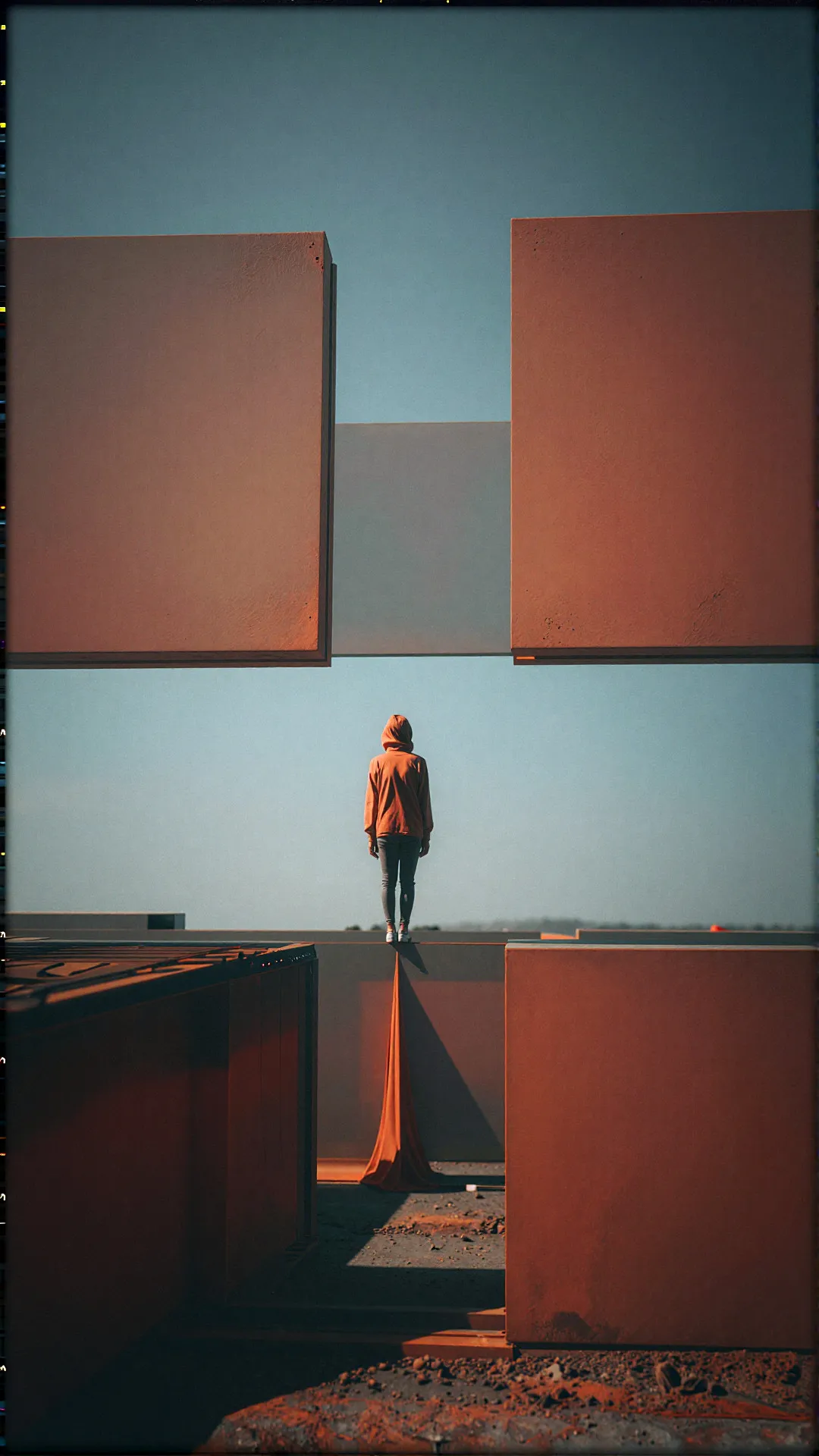
“Conformity” works in the opposite register. It belongs squarely to Rust Orange and Dim Blue: oxidised slabs set against a cold, flat sky, with nothing in between to soften the contrast.
A single hooded figure stands on a ledge, facing away, dressed in the same rust as the architecture around her. Massive rectangular blocks float above and beside her, aligned but never quite joined. Furthermore, a long train of orange fabric falls from her back into the gap below. It is the only element in the frame that still behaves like a material rather than a module.
Therefore, the title cuts both ways. The figure conforms to the colour and the grid of a structure that dwarfs her completely. At the same time, the trailing fabric refuses that geometry outright. I am interested in exactly that moment, where belonging and dissolving look identical from a distance.
Both works circle the problem I set out in my essay on autopoiesis as myth. The model invents nothing from nothing. Rather, it recombines, and the decisions that matter happen where I choose to keep what it got wrong.
Both works sit close to the argument I made in my essay on autopoiesis as myth. Recombination is not a weakness of the machine. Rather, it is the only way any image has ever been made.
What a Feature Actually Changes
A feature in a free magazine does not sell prints. Nevertheless, it does two useful things. First, it places the work inside a documented archive that stays online and stays citable. Second, it sets the work next to 143 other creators, which is a far more honest measure of position than any single-artist page can offer.
Additionally, the format itself deserves attention. Hundreds of pages of curated output, free to download, is a real resource for anyone trying to understand what generative image-making looks like right now. Most surveys of the field are either academic or promotional. This one is simply evidence.
Read Both Issues of the Sixfingers AI Art Magazine
Both volumes are available on the IIIIL website. You can read them in the browser or download the PDF without an account.
- SIXFINGERS Vol. 1 – July 2026, 324 pages, 128 creators, 290 artworks
- SIXFINGERS Vol. 2 – August 2026, 362 pages, 144 creators, 328 artworks
- Magazine overview and all issues
Finally, if you want to see how these two works connect to the wider practice, The Rust Bloom covers the material side, and the about page lists the full background.
Follow the development of this and other series on Instagram or explore further work at www.stefaneisele.com