Autopoiesis as Myth — On the Limits of AI Art
Creativity is not self-producing. The AI model recombines finite data into infinite forms, proving that autopoiesis is a myth.
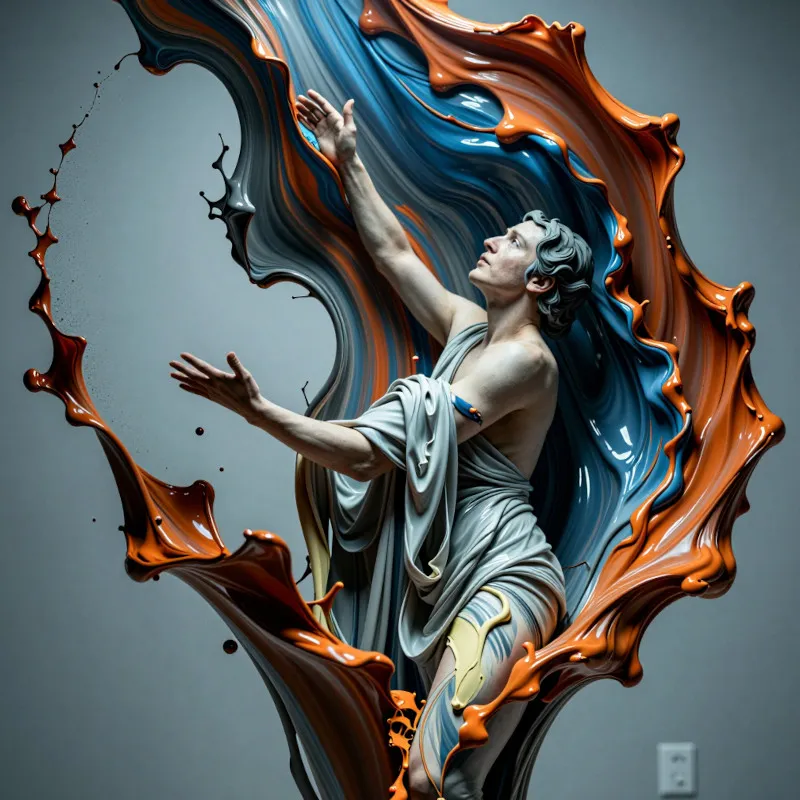
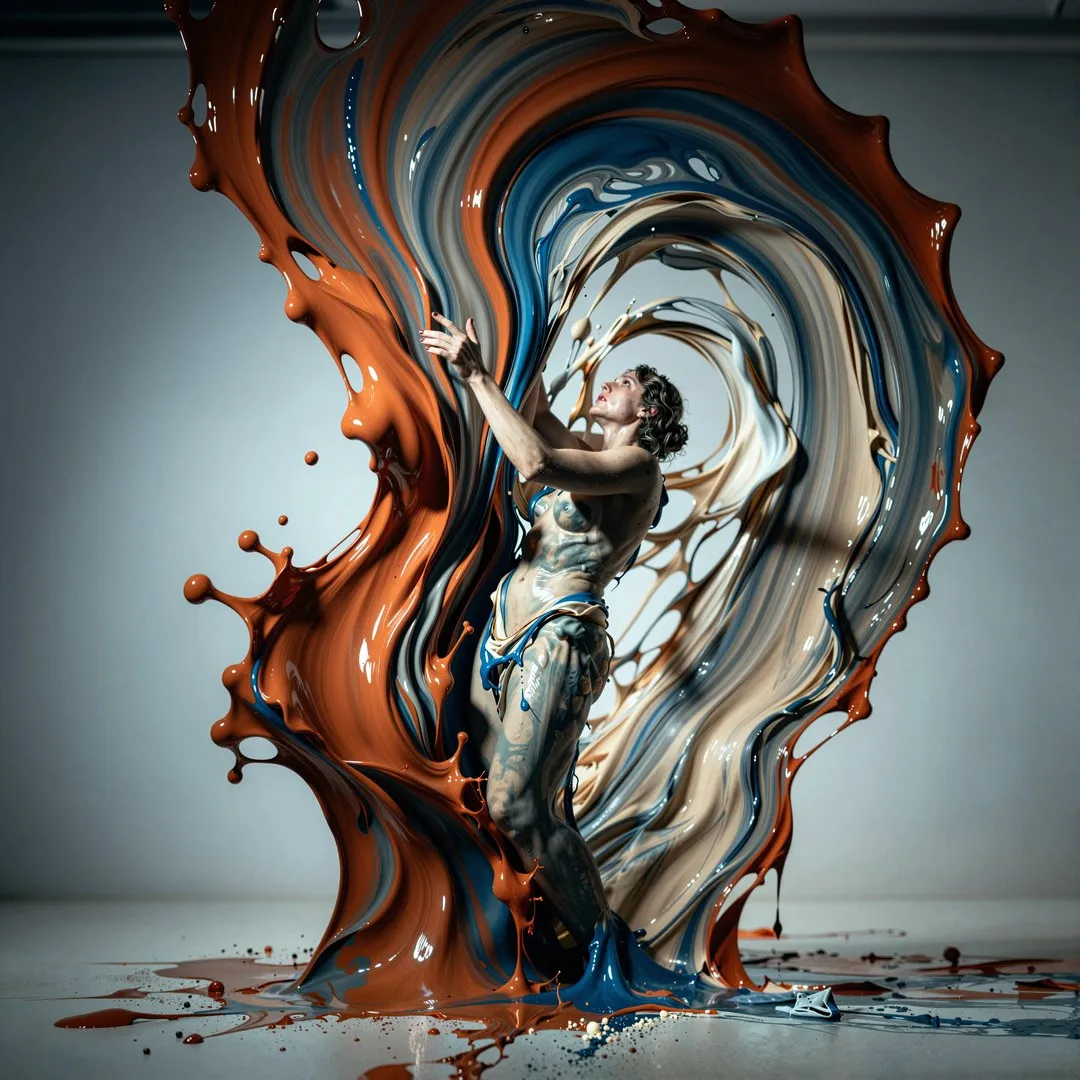
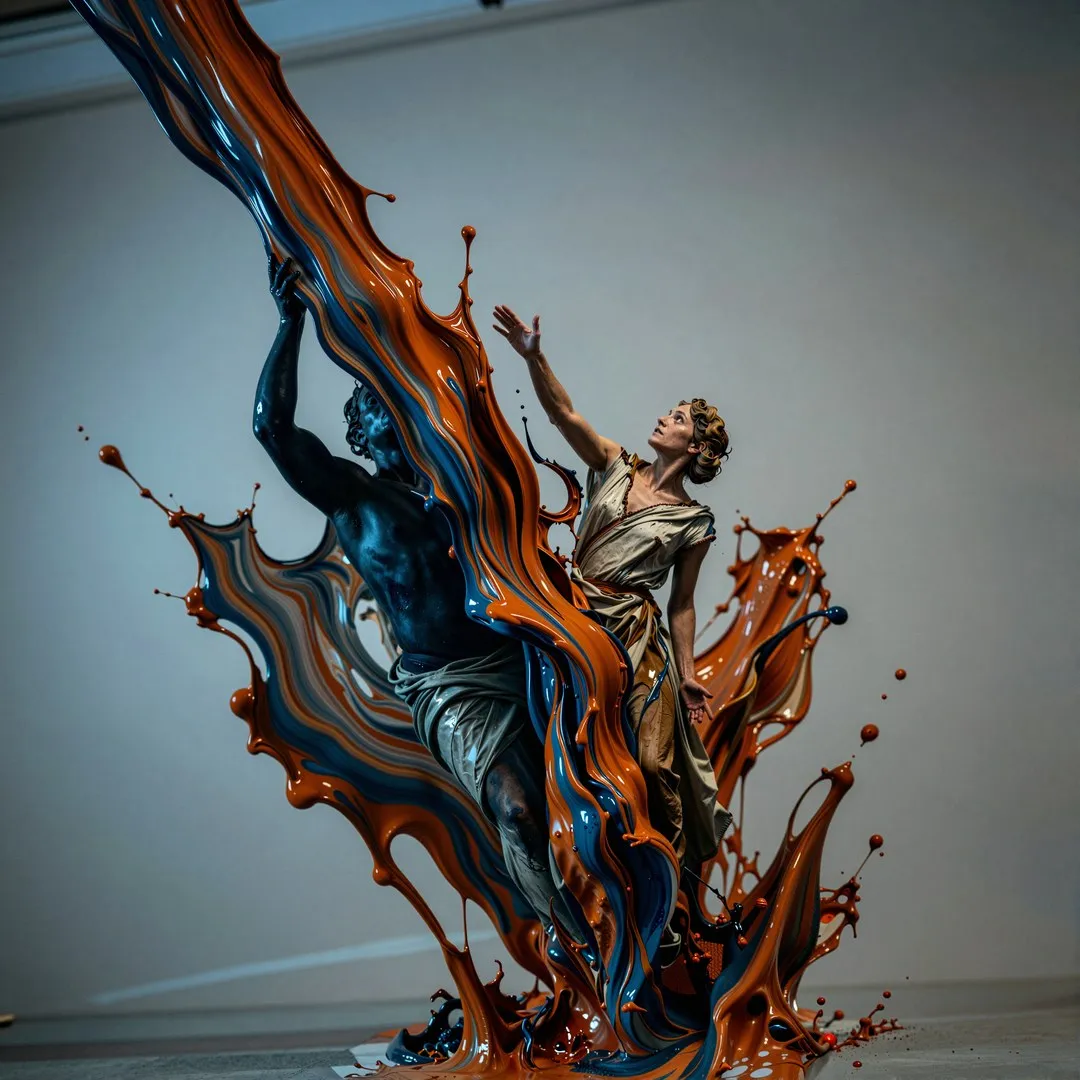
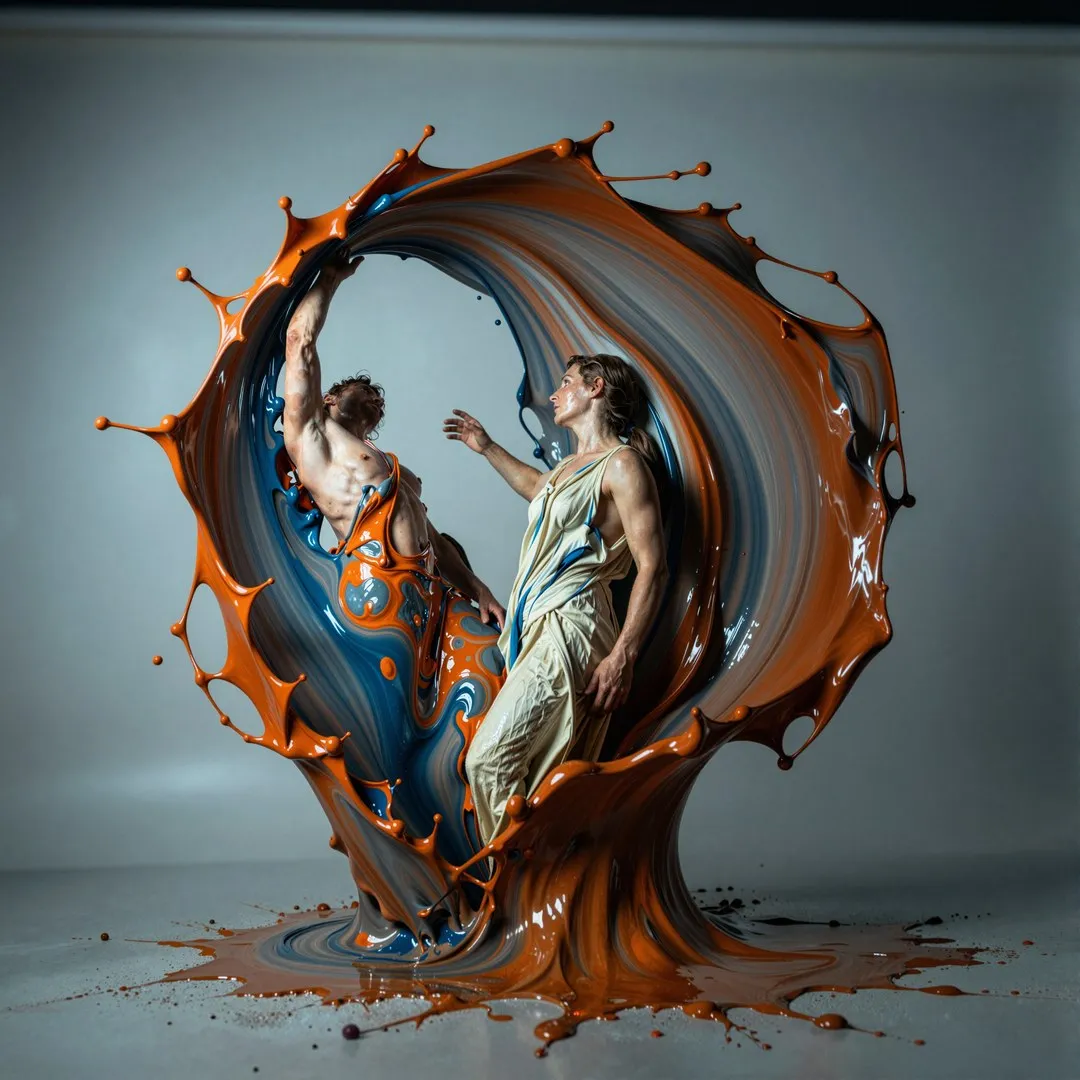
I open ComfyUI and drop a workflow onto the canvas. The sampler begins to denoise, dragging pixels from the latent space into something that resembles a classical figure. The image that emerges is not a ghost of a past painting, but a new composition built from the friction of learned data. It is a process of erosion, where the edges of a marble statue dissolve into a swirl of rust orange and dim blue. This is where the debate about artificial creativity usually stalls, because the argument assumes that novelty must come from a vacuum.
I argue that this assumption is false. Autopoiesis as myth is the central error in how we discuss machine learning today. We expect the model to create ex nihilo, ignoring the fact that human creativity has never been self-producing. Every style, from Cubism to Baroque, is a recombination of what came before. The model does not generate; it recombines, and the trace of the dataset remains visible in the grain of the output.
The piano has eighty-eight keys, which is a finite material constraint. Beethoven did not invent the keys, yet the music he produced was not limited by them. The AI model works the same way. It is bounded by the training data, but the recombination of that data is not limited. The infinite arises not from the absence of a source, but from the endless permutations of a finite set.
Autopoiesis as Myth in Creative Practice
The term autopoiesis implies a system that creates itself, closed off from the outside. In art, this is a fantasy. Picasso did not invent Cubism in a void; he worked in dialogue with Braque, absorbing and reshaping forms until they became something new. The model operates on the same principle of dialogue, because it ingests the history of art and recombines it.
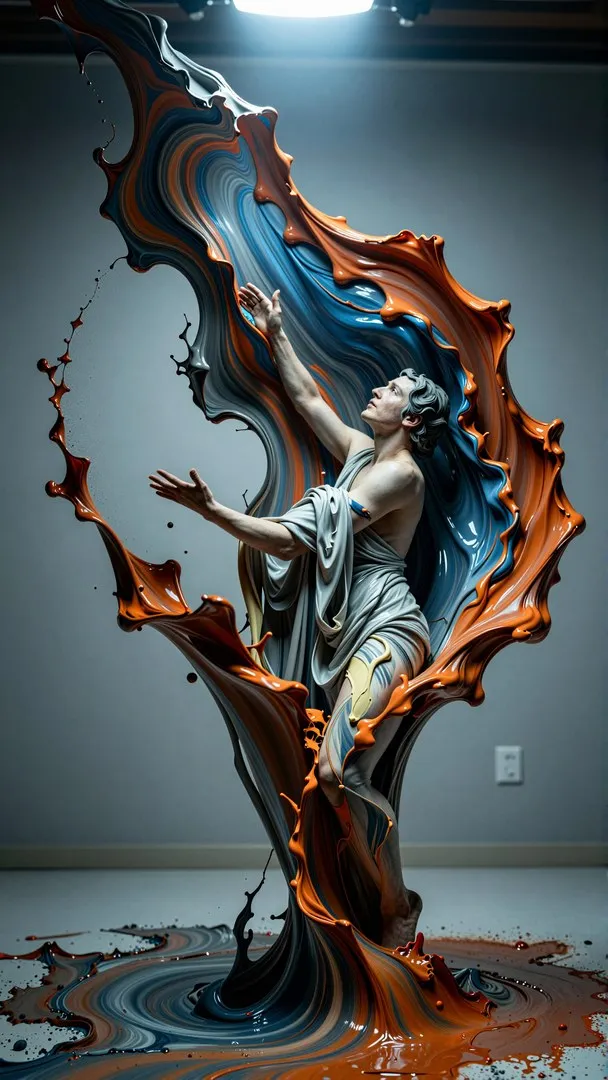
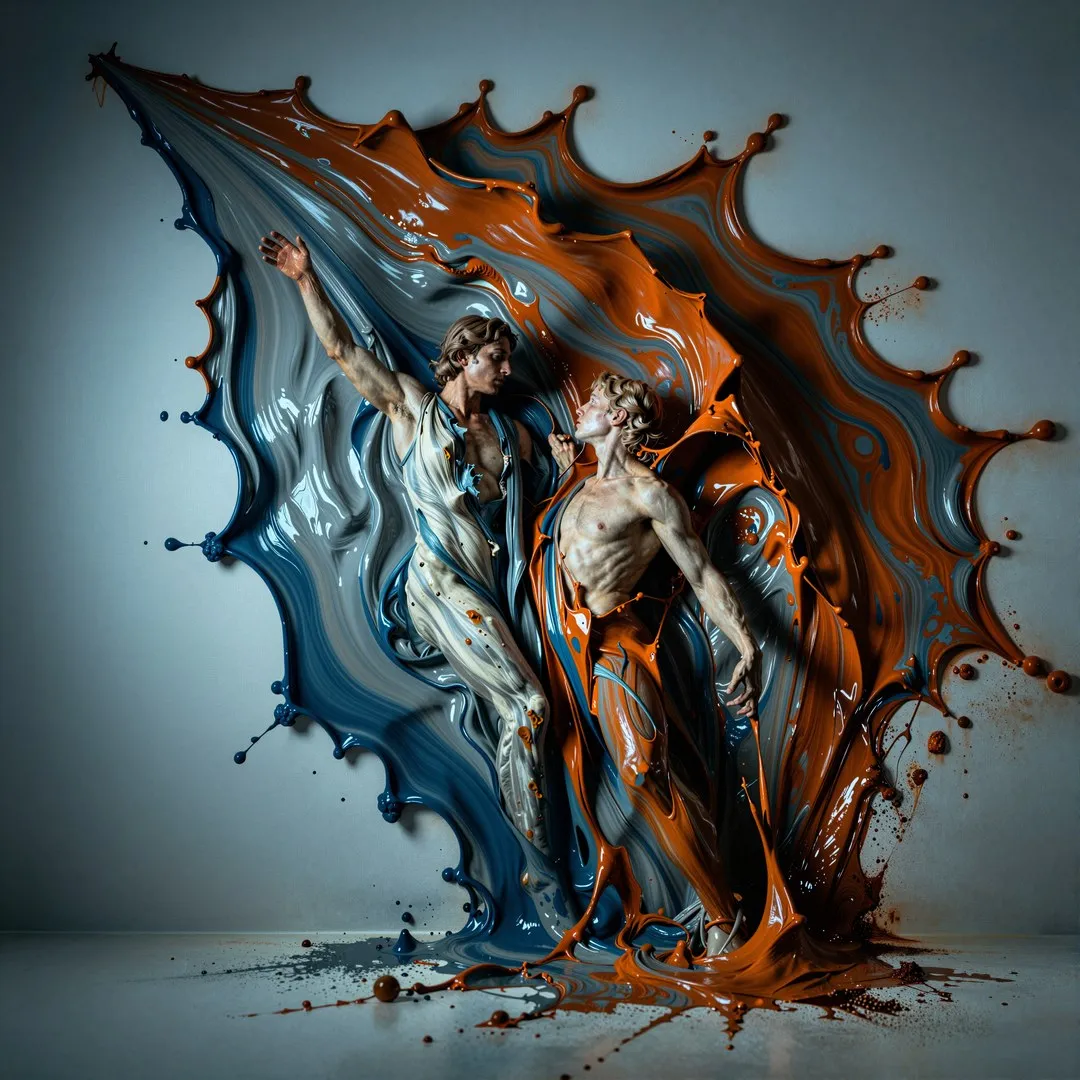
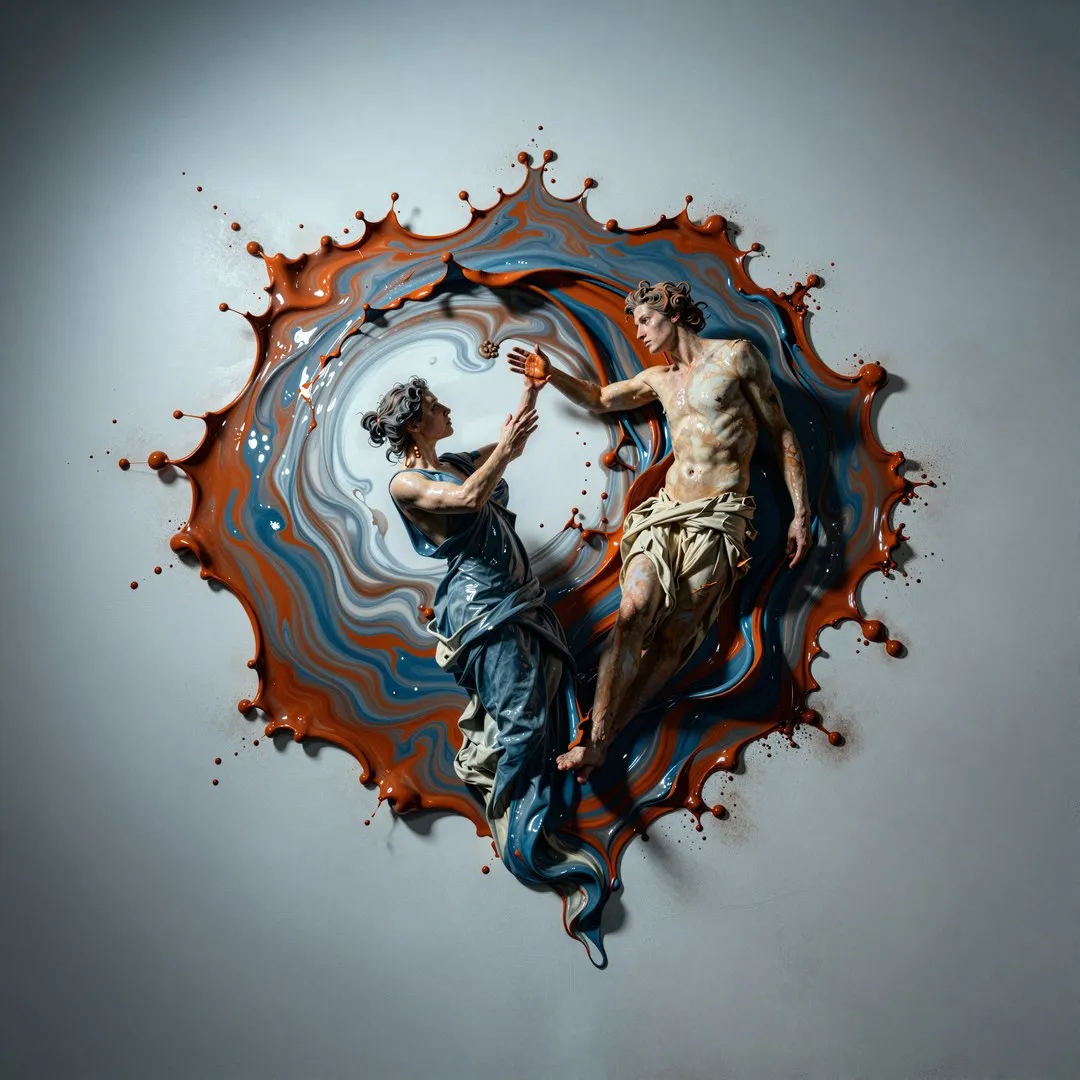
When I look at the generated figures, I see the residue of that history. The classical drapery and the marble texture are not hallucinations, but references that the algorithm has weighted and shifted. The innovation lies in the combination, not in the invention of a new material. The model drags the familiar toward the strange, creating a friction that feels like novelty.
We often mistake the lack of a biological hand for a lack of agency. Yet the agency here is in the selection, the weighting, and the iteration. The artist chooses the seed, the prompt, and the control net, while the machine handles the diffusion. It is a collaboration between intent and accident, where the accident is guided by the logic of the dataset.
Finite Keys, Infinite Combinations
The keyboard is a perfect analogy for the latent space. The keys are fixed, the intervals are standard, but the music is not. Beethoven used the same material as Mozart, yet the output was distinct because the recombination was different. The AI model is the same, because it is limited by the parameters of the training set, but the combinations are virtually endless.
Some critics argue that the model is merely a parrot, repeating what it has seen. This overlooks the complexity of the recombination. The model does not copy; it abstracts. It learns the logic of a brushstroke, the weight of a shadow, the curve of a muscle, and then applies that logic to a new context. The result is not a replica, but a translation.
The video shows this process in motion. The figures emerge from the noise, shifting from abstract shapes into recognizable forms. It is a visual argument against the idea that the output is static. The image is always becoming, because the diffusion process is never truly finished. The final render is just a pause in the flow.
The Materiality of Latent Space
I work with a palette of rust orange and dim blue, because these colors carry the weight of decay. In industrial design, we study how materials weather, how paint cracks, how metal oxidizes. The AI model simulates this weathering, because it has seen millions of images of rust and erosion. The output is not just a visual; it is a material simulation.
The figures in the images are not static statues. They are caught in a moment of dissolution, as if the marble is melting into liquid paint. This is the tension between the algorithmic control of the prompt and the organic emergence of the diffusion. The edges are not clean; they are frayed, heavy, and textured. The model drags the image toward friction, creating a sense of weight that defies the digital medium.
This materiality is the key to the work. It is not about the technology, but about the surface. The grain of the image, the shadow of the form, the residue of the data — these are the materials I work with. The model is just the tool, like a chisel or a brush. The art is in the mark it leaves.
The claim that AI art is limited by its dataset is a misunderstanding of creativity itself. Creativity is not the invention of new atoms, but the rearrangement of existing ones. The model is not a creator in the human sense, but it is a generator of new forms. The myth of autopoiesis must die, because it denies the reality of influence. Every image is a trace of what came before, and that is not a weakness. It is the only way art exists.
Follow the development of this and other series on Instagram or explore further work at www.stefaneisele.com
Written with the help of AI.