Handcrafted AI Slop: When AI Art Becomes Controversy
Stefan Eisele turns AI slop into handcrafted art — deliberately.AI-ARTS Top 10 2024. See the series that challenges what"generated" actually means.
The current debate about AI art reveals a remarkable lack of nuance. While some dismiss algorithmic image generation wholesale as “AI Slop” – cultural waste – others celebrate every machine output as an artistic revolution. Both positions miss the complexity of the phenomenon.
My new series Handcrafted AI Slop deliberately positions itself within this controversy. Not as mediation, but as a visualization of the contradiction itself.
The Undifferentiated AI Art Debate
The term “AI Slop” spreads like wildfire through art criticism and tech discourse. It describes the bland similarity of algorithmic images, the uncanny uniformity of generative outputs. The implication: artificial intelligence inherently produces cultural waste material – content without culture.
Francesco D’Isa captures this problem precisely in his essay “The Idea of ‘AI Slop’ Is Slop”: “Why has the discovery that we can produce junk with machines made us blind to the fact that humanity has never done much better?” The majority of human production has always been mediocre. D’Isa quotes Alberto Puliafito from Slow News: We have never produced one masterpiece after another – we have mostly made mediocre things, and we will continue to do so.
The Historical Perspective on Mediocrity
This assumption collapses the moment we examine art history. D’Isa describes how Roman villas were filled with standardized marble copies of Greek statues – entire workshops specialized in reproducing Aphrodites and Apollos with quasi-algorithmic precision.
Centuries later, ex-voto paintings flooded Europe and Latin America. Images following an almost mechanical formula: scene of danger, divine intervention, handwritten thanks. The Grand Tour of the 18th century spawned an entire industry of vedute – idyllic views of Venice or Rome, endlessly repeated for wealthy travelers.
Why Market Flooding Says Nothing About Quality
What we today call “AI Slop” is the visible surplus of a process that has always accompanied art when tools become widely available. D’Isa puts it this way: “The quantity of rubbish says nothing about the potential for excellence – if anything, it confirms the very meaning of the word ‘excellence’, which implies its rarity.”
The irony of the current debate: AI merely makes visible what has always been there. It shows us the statistical average of human vision. D’Isa argues that generative models are not a corruption of the creative process but its X-ray. “The machine has simply made our habits explicit and given visible form to the clichés we already cherished.”
The Double Standard in Art Criticism
D’Isa identifies a remarkable moral double standard: “When human artists reproduce clichés, we call it convention; when a machine does the same, we call it corruption.” This asymmetry has less to do with aesthetics than with fear.
He references media researcher Kirsten Drotner, who has shown that every technological shift produces its own media panic – a moral outbreak that reformulates old cultural anxieties in the language of the new medium. “The pattern is ritual: first alarm, then adaptation, then absorption into the cultural norm. AI has simply become the latest stage for this cycle of anxiety.”
Baudelaire warned as early as 1859 about photography, which would “supplement art, but soon displace or corrupt it, thanks to the stupidity of the masses.” History proved him wrong – not because photography produced no mediocrity, but because masterpieces also emerged from the same technical foundation.
Handcrafted AI Slop: Contradiction as Artistic Method
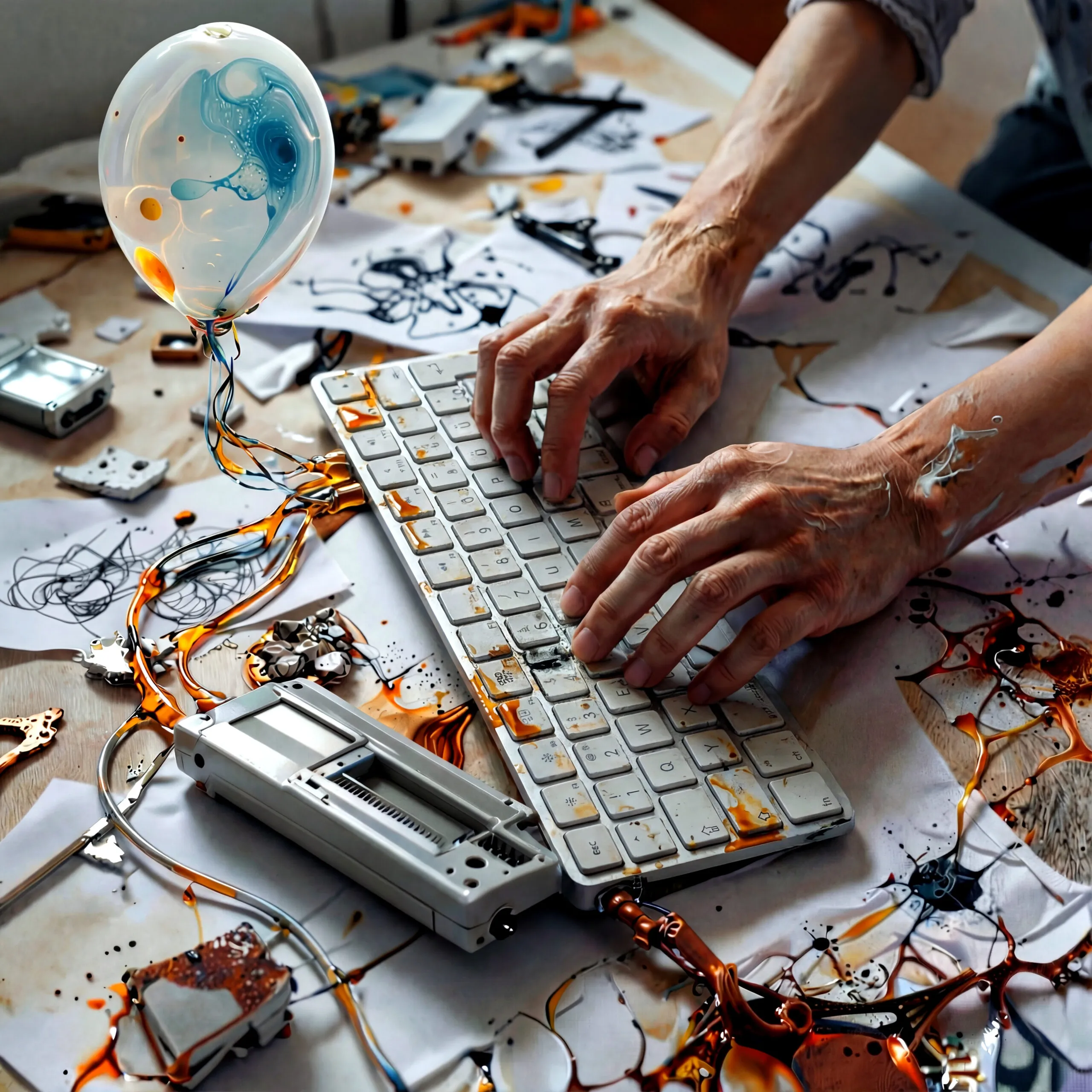
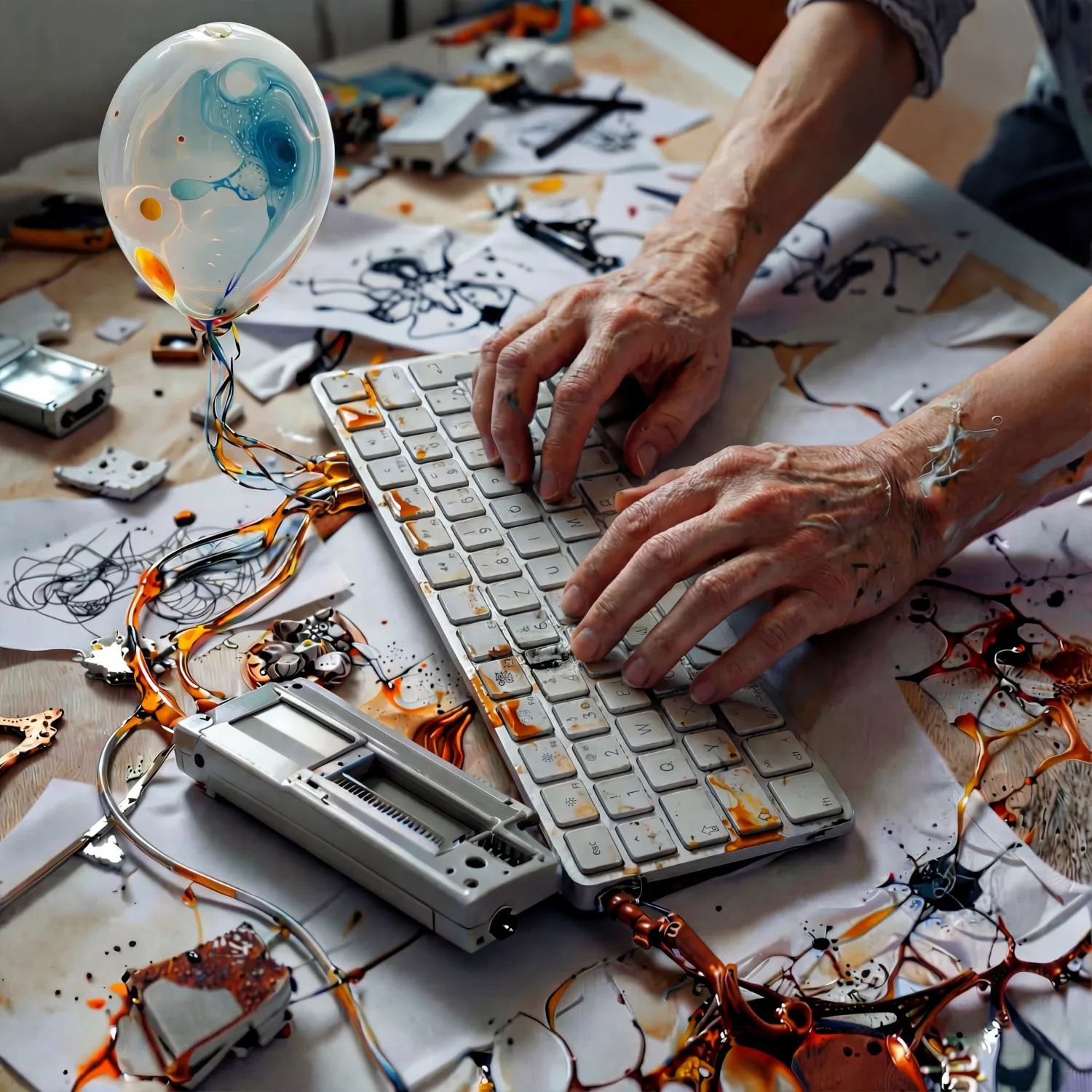
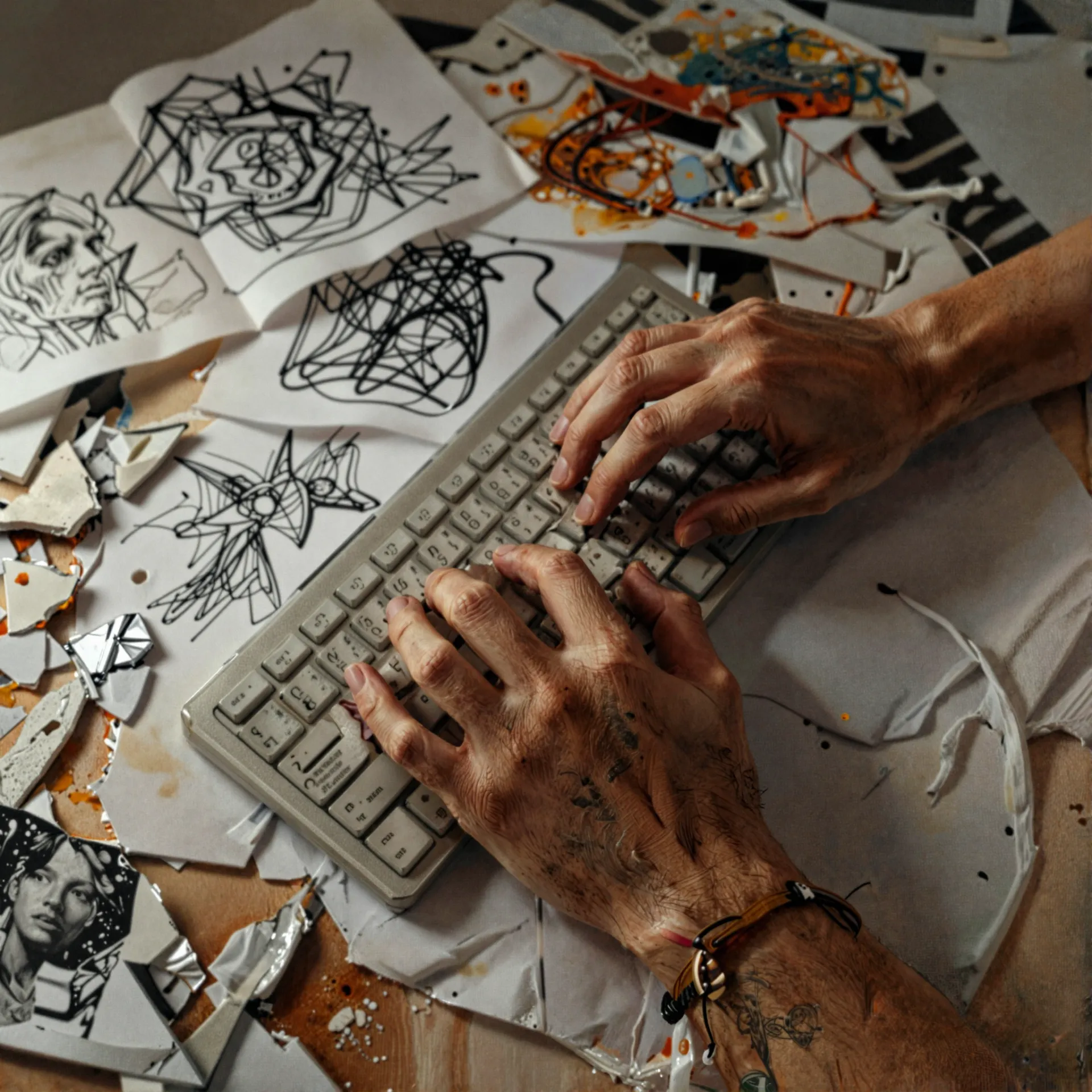
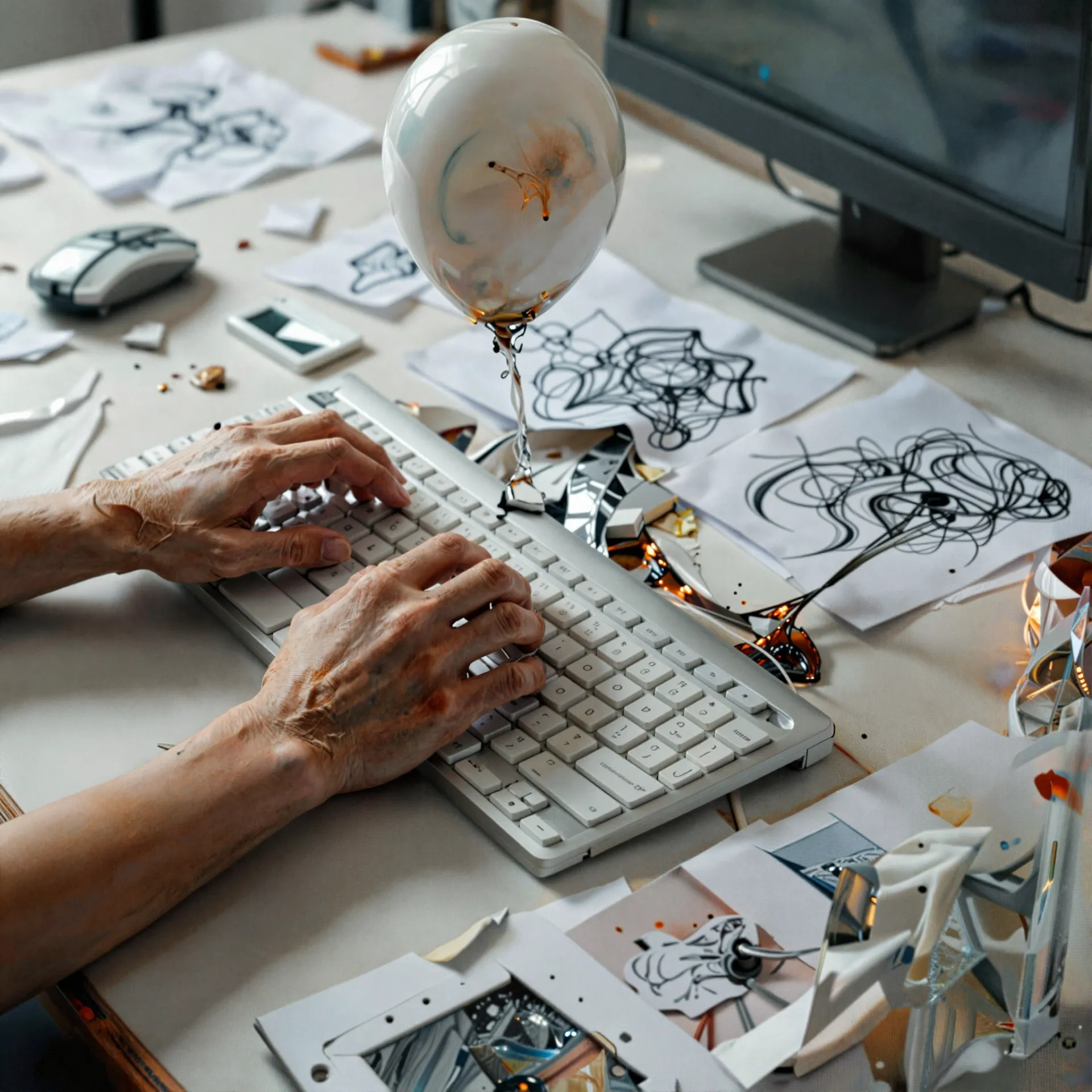
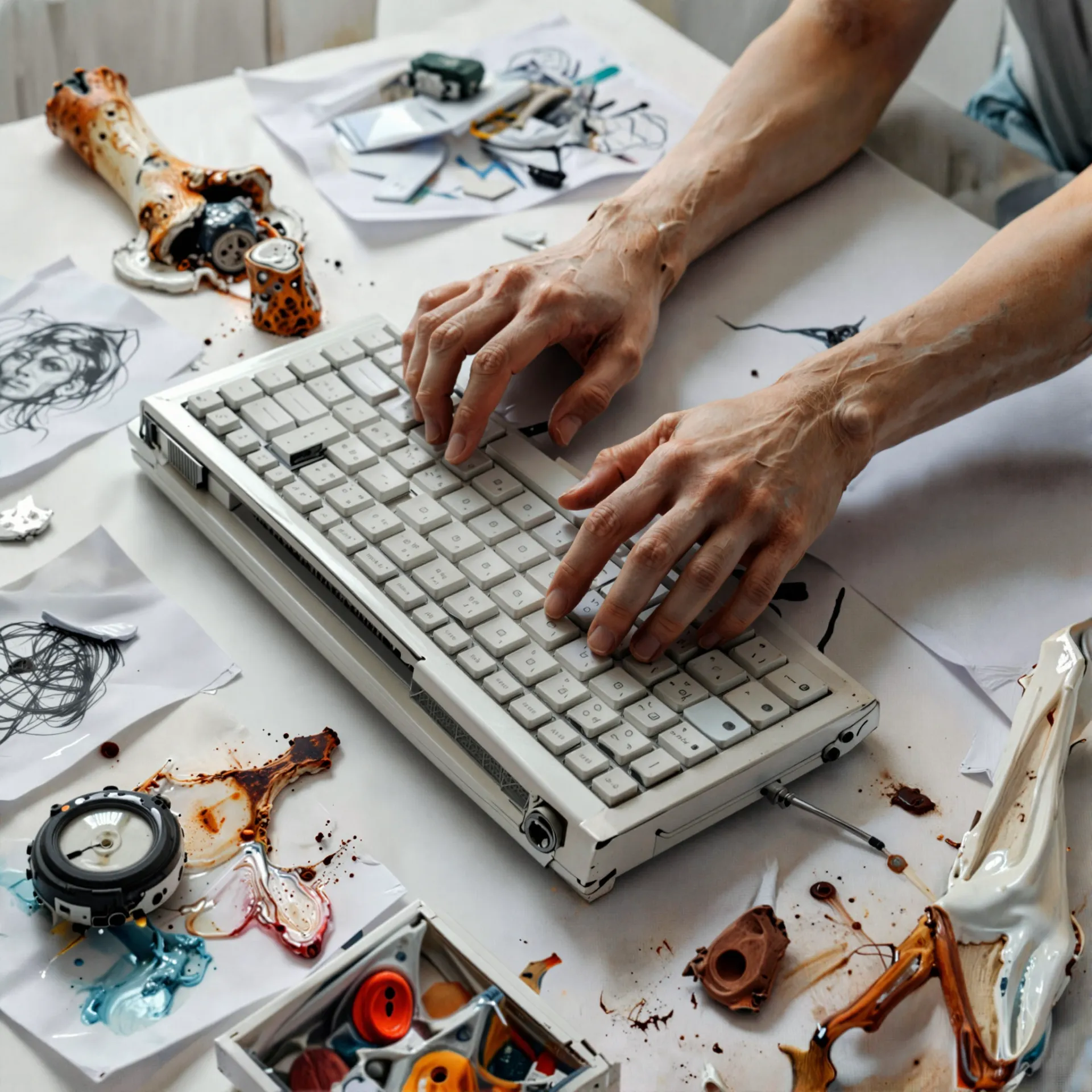
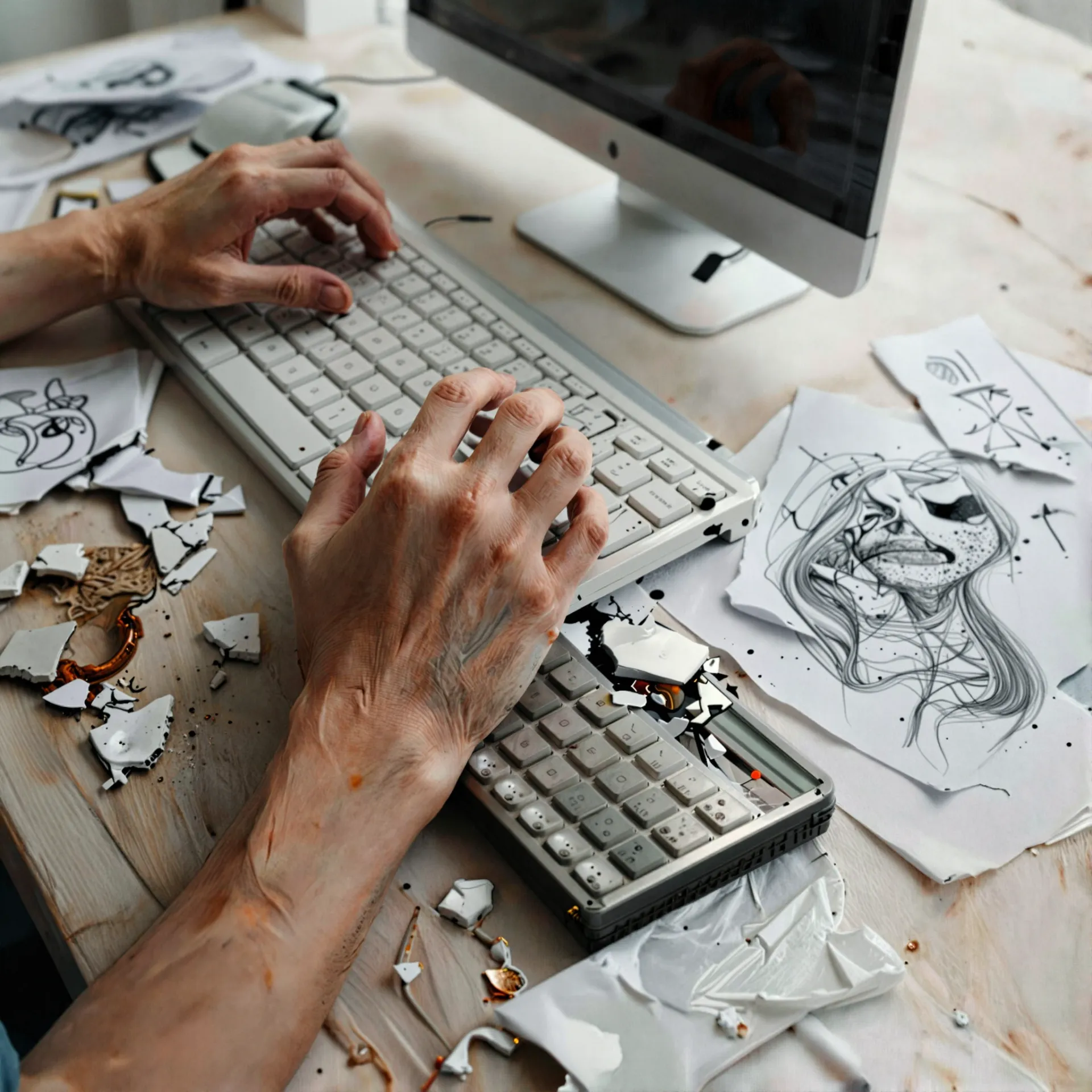
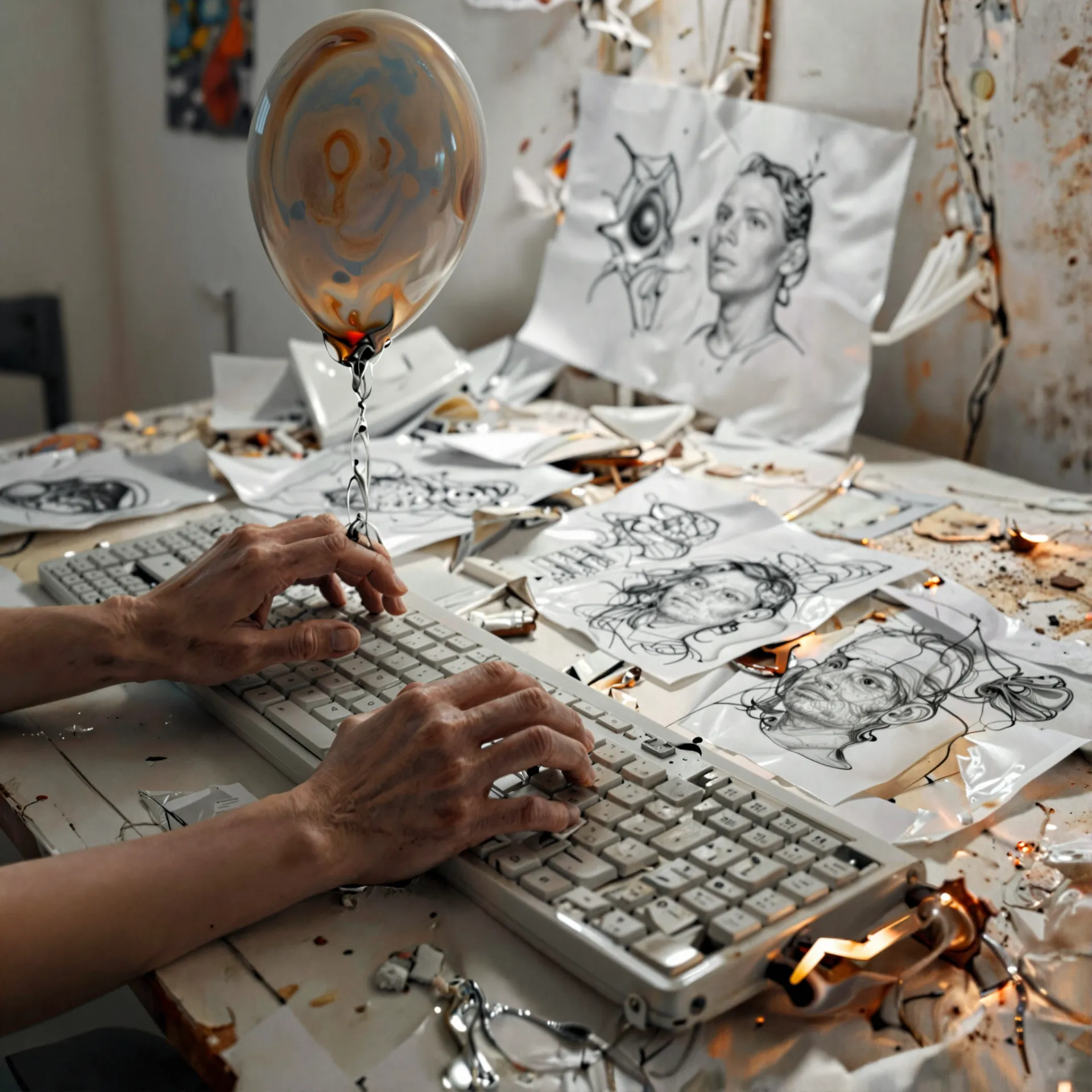
The title of my series is a deliberate provocation. It combines “Handcrafted” – intention, labor, precision, value – with “Slop” – mass, arbitrariness, trash, worthlessness. This semantic contradiction is not the problem of my work, but its thesis.
Workflow Engineering Instead of Prompt Engineering
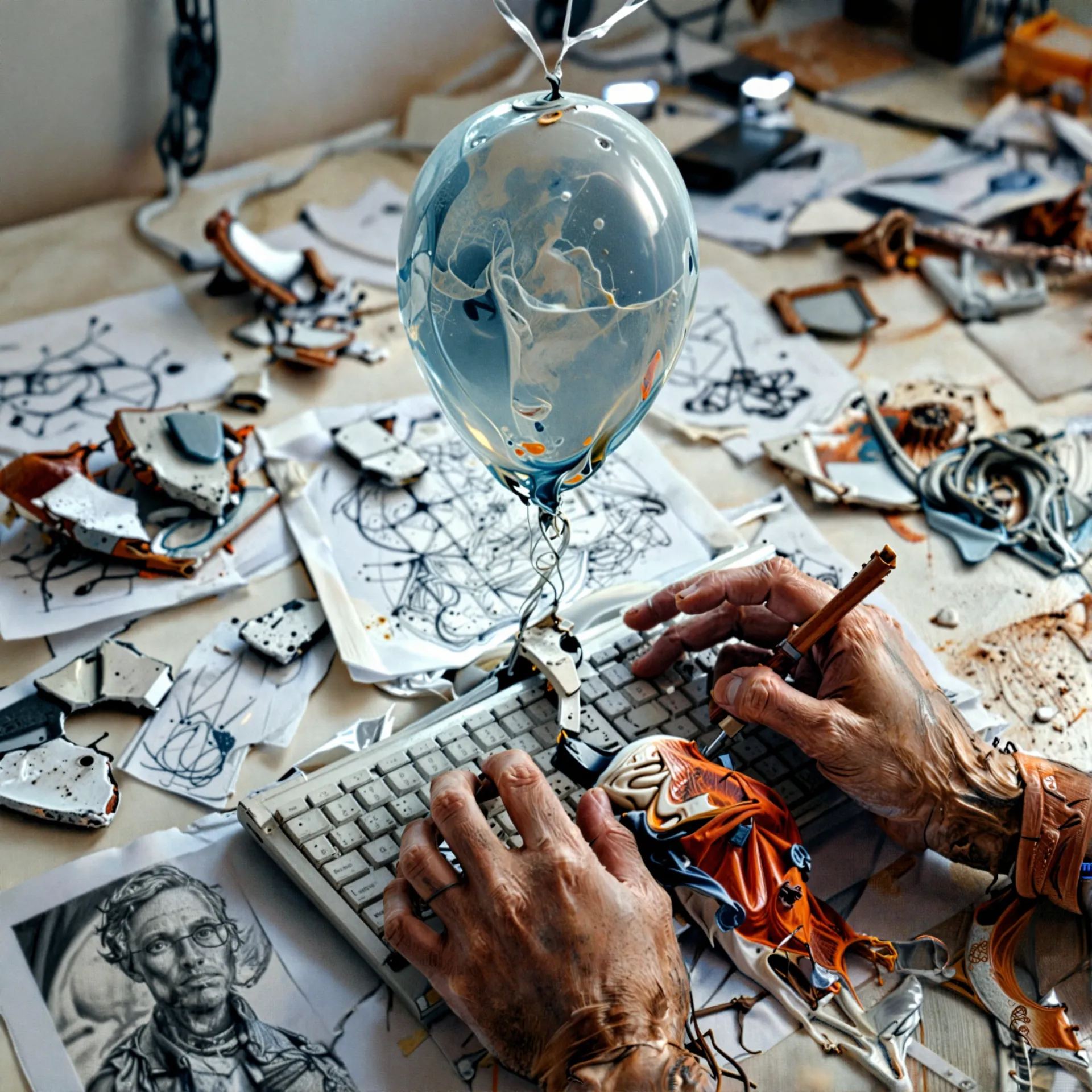
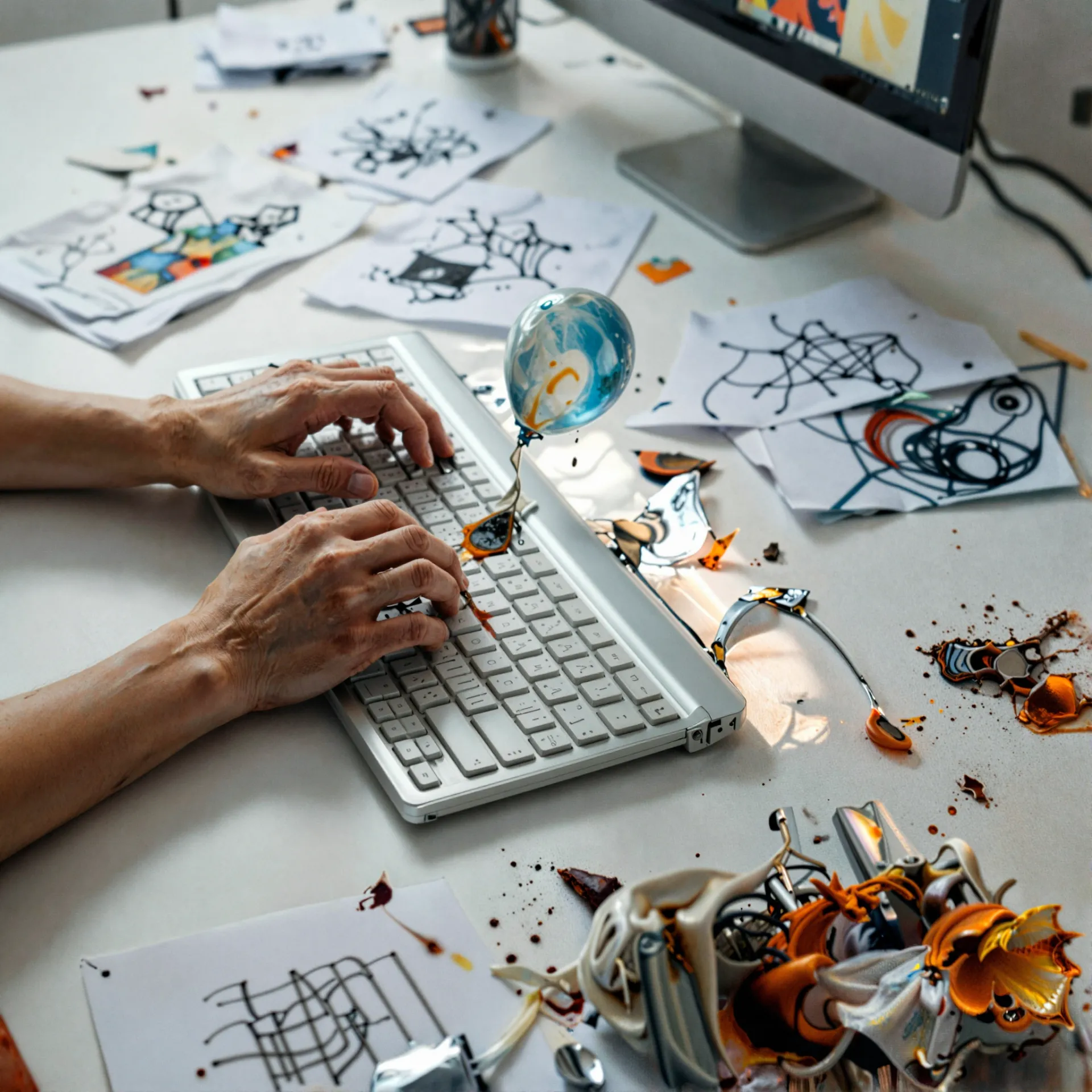
I don’t work with simple prompt engineering, but with deliberate workflow engineering. Through the use of Comfy, Z-Image Turbo, AnimateDiff, ControlNets, and manual sketches, a modular approach emerges that is far removed from the “black box” luck of a simple, thoughtless prompt.
Each image goes through dozens of iterations, manual corrections, and conscious decisions about composition, color palette, and materiality. The images in this series deliberately bear the traces of their production: rust, decay, texture, algorithmic materiality.
Between Industrial Logic and Organic Decay
My background in industrial design is the conceptual foundation of this work. It gives the generative forms a structural logic that “pure” AI art often lacks. The recurring cubes, fractals, and geometric arrangements are deliberate references to the history of generative art – with awareness of their danger of falling into “easy beauty.”
The series moves in the tension between order and chaos, between industrial precision and organic decay. This duality is traditional, yes – but its execution is contemporary.
From Controversy to Dialogue
The current debate is characterized by false dichotomies: human versus machine, craft versus algorithm, art versus slop. Handcrafted AI Slop refuses these simple distinctions.
This work deliberately invites discourse. It visualizes the controversy without resolving it. It shows the tension between artisanal intention and algorithmic execution, between industrial precision and organic decay.
D’Isa reminds us that if “AI Slop” triggers discomfort, it may be because it mirrors “the collective and unfiltered texture of what we are.” The abundance of the trivial is not a catastrophe but both residue and raw material of culture.
Valuable AI Art Will Prevail
I am firmly convinced that AI art has its legitimate value in our society – not despite, but precisely because of the flood of mediocre outputs. As D’Isa formulates it: “Art, in any age, is a matter of selection.” The quantity of the mediocre does not make excellence impossible – it defines it in the first place.
The Impressionists were mocked in 1874 as “daubers.” Louis Leroy derisively described a painting as a “preliminary sketch for a wallpaper pattern.” They were the “sloppers” of their time. D’Isa quotes Deni Ellis Béchard from Scientific American: “‘Slop’ helps us when used correctly. Calling everything worthless is a misguided attempt to dam the flood rather than channel it.”
The valuable outputs will stand out from mediocrity – not because the technology guarantees it, but because artistic intention, artisanal care, and conceptual depth will always prevail.
Rust as Conceptual Resistance
The strength of this series lies in the rust – in the texture, in the decay, in the impurity. The danger lies in the blue – in the smoothness, in the perfection, in the algorithmic cleanliness. Handcrafted AI Slop deliberately seeks the impure, the flawed, the human within machine perfection.
This is not a nostalgic return to pre-industrial ideals. It is a contemporary engagement with the conditions of production in the age of algorithms.
D’Isa concludes his essay with an observation that also applies to this series: “Art looks less like a cathedral and more like a market stall: crowded, noisy, full of cheap miracles. Among them, now and then, a small image will shine brighter than the rest, and we will call it beauty. The rest is slop, human slop.”
The question is not whether we can avoid the slop. The question is what we make of it – and whether we are ready to search within the abundance of the mediocre for those rare moments in which intention and technique, human and machine, craft and algorithm merge into something that transcends both.
About the Series:
Handcrafted AI Slop is part of my ongoing exploration of generative AI art.
Sources:
Francesco D’Isa: “The Idea of ‘AI Slop’ Is Slop”, The Philosophical Salon, December 2025
https://thephilosophicalsalon.com/the-idea-of-ai-slop-is-slop/
The article was created with the help of ai